Navigating the Global Lifelines: The Top 5 Busiest Shipping Routes
The world’s oceans are an intricate and dynamic network of trade, silently connecting continents and economies with an efficiency that underpins modern life. Every single day, thousands of colossal vessels traverse these vast expanses, carrying an astonishing array of goods – from the raw materials that fuel industries to the finished products that fill our homes and stores. This colossal movement of goods is a testament to human ingenuity and global cooperation, yet not all oceanic pathways are created equal. Some routes are far busier than others, serving as indispensable arteries for global commerce and the very lifelines of our interconnected world.
Understanding these major shipping lanes offers a fascinating glimpse into the incredible scale, precise coordination, and often precarious nature of modern global logistics. These aren’t just lines on a map; they are corridors of economic power, geopolitical importance, and vital infrastructure. Here are the top 5 busiest shipping routes in the world, each a marvel in its own right:
1. The Strait of Malacca: Asia’s Chokepoint
Connecting the Indian Ocean and the Pacific Ocean, the Strait of Malacca is unequivocally the most strategically important and arguably the busiest shipping lane on Earth. Flanked by the bustling nations of Malaysia, Singapore, and Indonesia, this relatively narrow stretch of water is a veritable maritime highway. It witnesses the passage of over 80,000 vessels annually, carrying a staggering 25-30% of the world’s traded goods.
The Strait’s significance is amplified by its role as a critical energy conduit. It handles the majority of oil and gas shipments destined for East Asian economic powerhouses like China, Japan, and South Korea. Its narrowest point, the Phillips Channel near Singapore, is just 1.5 nautical miles wide, making navigation challenging and highlighting the constant threat of congestion, piracy, and accidents. Any major disruption here would have monumental global economic consequences, effectively isolating half the globe’s manufacturing base from its energy supply.
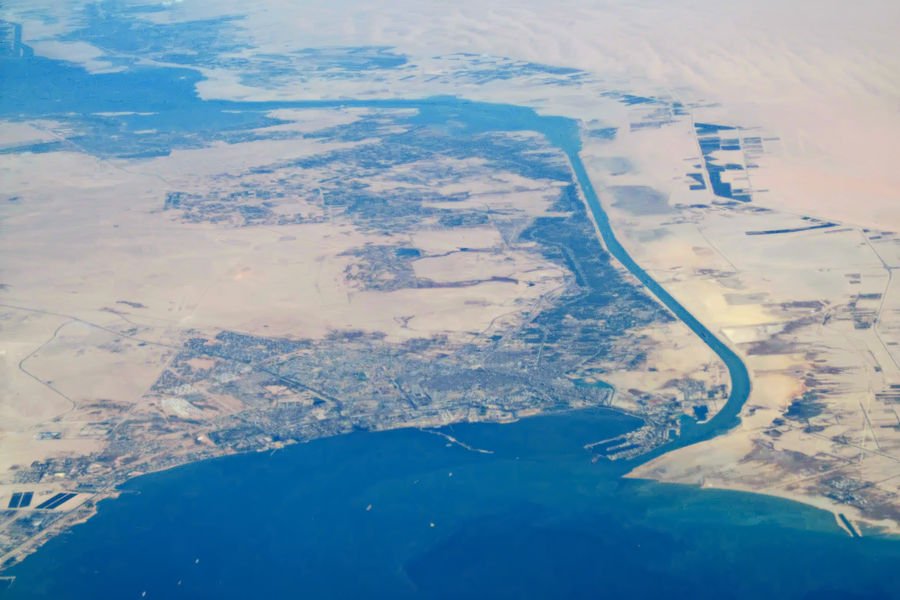
2. The Suez Canal: Linking East and West
An incredible feat of 19th-century engineering, the Suez Canal is perhaps the most famous maritime shortcut in the world. It provides a direct link between the Mediterranean Sea and the Red Sea, effectively cutting the journey between Europe and Asia by thousands of nautical miles, circumventing the need to sail around the entire African continent.
As the gateway for the majority of Europe’s trade with Asia, this artificial waterway is one of the world’s most vital waterways for containerized cargo and oil transport. It is a critical chokepoint, with hundreds of vessels passing through its waters weekly. While the sheer number of vessels is significant, the canal’s importance is defined by the immense monetary value and strategic volume of cargo—around 12% of global trade—that passes through its single, narrow lane. The 2021 grounding of the Ever Given provided a stark, real-world example of just how fragile global supply chains are, underscoring the canal’s irreplaceable role.
3. The Panama Canal: Bridging the Americas
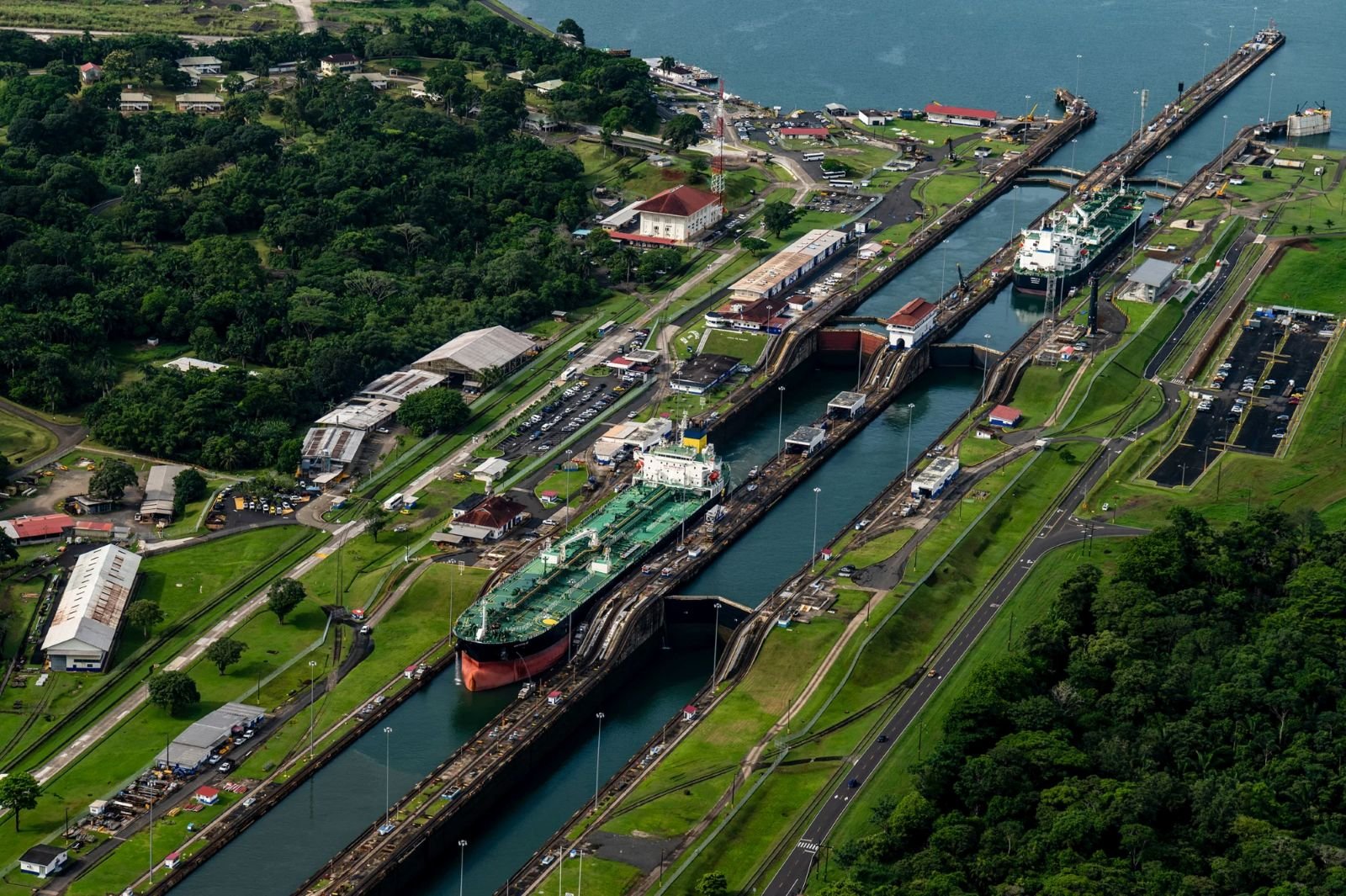
The Panama Canal revolutionized global shipping by creating a navigable path between the Atlantic and Pacific Oceans, saving ships a lengthy and hazardous voyage around Cape Horn at the southern tip of South America. Opened in 1914, this 82-kilometre-long marvel of locks and artificial lakes primarily serves the massive trade flow between the US East Coast and Asian markets, particularly China and Japan.
The canal’s volume is massive, but its recent expansion (completed in 2016) to accommodate larger “Neo-Panamax” vessels has dramatically increased its capacity and strategic value. Although it handles slightly less traffic than Malacca, its function as the only viable shortcut between the world’s two largest oceans makes it indispensable for inter-American and trans-Pacific-Atlantic logistics, particularly for agricultural goods and manufactured products.
4. The English Channel and Strait of Dover
While not a ‘canal’ or a chokepoint between continents, the English Channel—and specifically the Strait of Dover—is one of the most intensely trafficked seaways in terms of sheer vessel movements. Connecting the North Sea to the Atlantic Ocean, it forms the maritime border between the UK and continental Europe.
The Strait of Dover, at its narrowest point, is only 33 kilometres (21 miles) wide, making it a convergence point for a constant stream of traffic: ferries, fishing boats, and, most significantly, a dense flow of international merchant vessels heading to and from the busy Northern European mega-ports like Rotterdam, Antwerp, and Hamburg. This corridor facilitates a vast amount of intra-European trade and is the critical marine access point for goods moving between the Americas/Africa and Northern Europe. The high density of traffic, combined with poor weather conditions, requires constant and rigorous Vessel Traffic Services (VTS) monitoring to prevent collisions.
4. The English Channel and Strait of Dover
While not a ‘canal’ or a chokepoint between continents, the English Channel—and specifically the Strait of Dover—is one of the most intensely trafficked seaways in terms of sheer vessel movements. Connecting the North Sea to the Atlantic Ocean, it forms the maritime border between the UK and continental Europe.
The Strait of Dover, at its narrowest point, is only 33 kilometres (21 miles) wide, making it a convergence point for a constant stream of traffic: ferries, fishing boats, and, most significantly, a dense flow of international merchant vessels heading to and from the busy Northern European mega-ports like Rotterdam, Antwerp, and Hamburg. This corridor facilitates a vast amount of intra-European trade and is the critical marine access point for goods moving between the Americas/Africa and Northern Europe. The high density of traffic, combined with poor weather conditions, requires constant and rigorous Vessel Traffic Services (VTS) monitoring to prevent collisions.
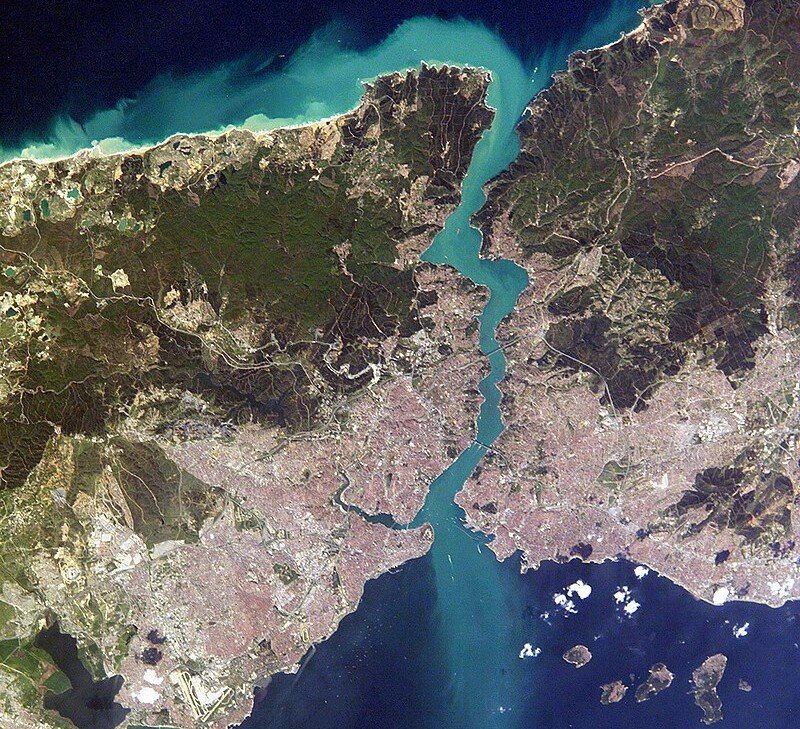
These five routes represent more than just efficient pathways; they are the throbbing pulse of the world economy. The concentration of trade in these chokepoints demonstrates an inherent logistical vulnerability. From geopolitical tensions to climate change affecting water levels (as seen in the Panama Canal), the efficient operation of these routes is a constant concern for governments and corporations alike. Their continued, safe, and secure functioning is absolutely essential for keeping the shelves stocked, the factories running, and the global economy moving forward.
News from the world of ROUTENIX
ROUTENIX announces its results for the first quarter of 2025
➝ Learn more

ROUTENIX completes 50% stake in Dev Logistics
➝ Learn more

ROUTENIX wins the prestigious E win award in London Logs 2025
➝ Learn more